
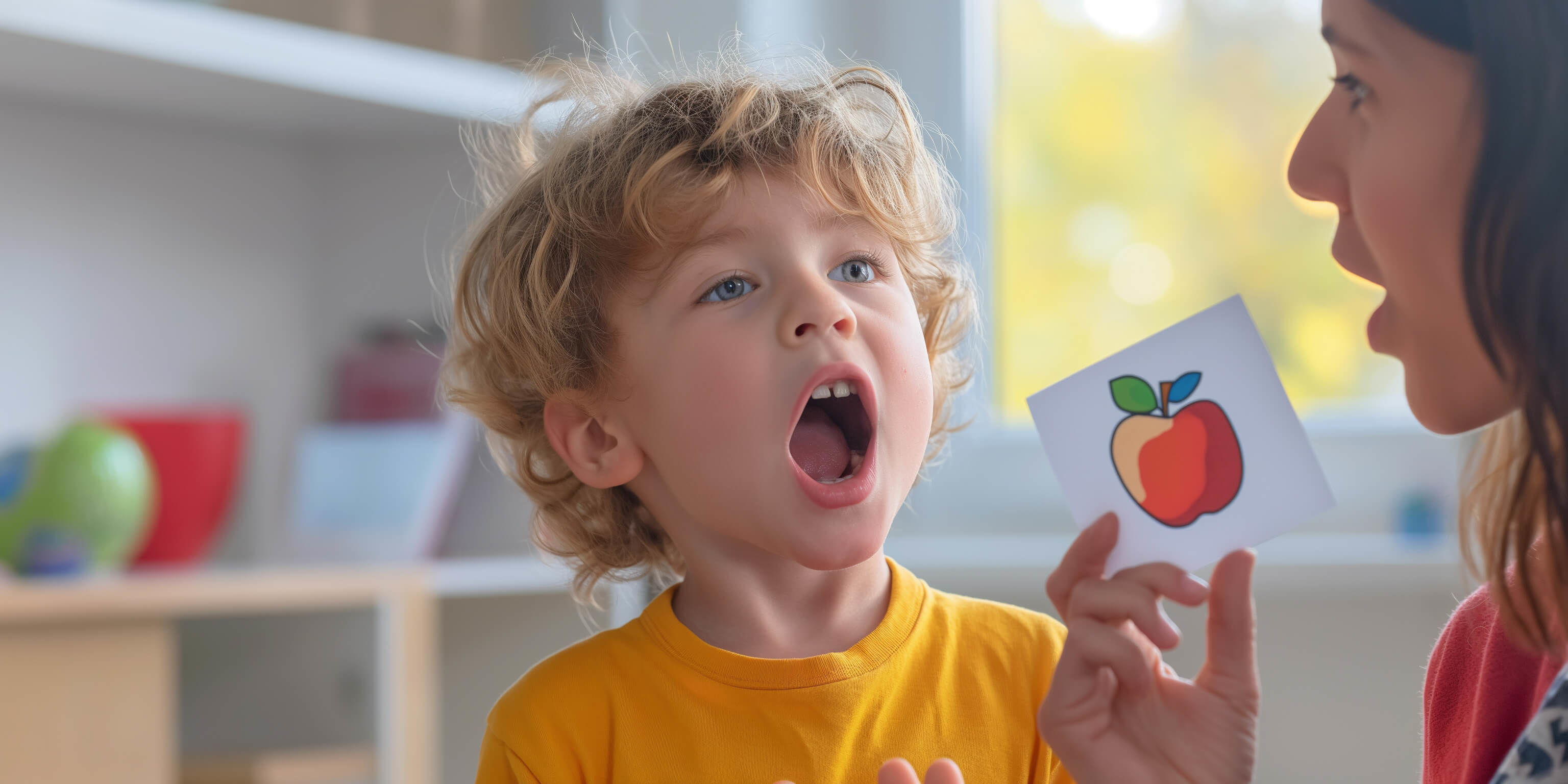
At home, your child chats, sings, argues with their siblings and tells you every detail of their day. Then you walk through the kinder gate or the classroom door, and they go completely silent. They won't answer the teacher, say hello to friends, or ask to go to the toilet.
Maybe the teacher has told you they "haven't heard your child's voice all term". Maybe grandparents say "she's just shy, she'll grow out of it". And maybe you've started to wonder: is this normal, and should I be worried?
If this sounds familiar, you're not alone, and there is a lot that can help.
Is it just shyness?
Many young children are shy at first. A shy child is usually quiet for a little while, then warms up and starts talking once they feel comfortable.
Some children don't warm up. They stay silent with certain people or in certain places for months, even though they talk easily at home. When this lasts more than a month (not just the first month at a new kinder or school) and gets in the way of learning or friendships, it may be selective mutism, also called situational mutism.
What is selective mutism?
Selective mutism is a type of anxiety. When your child feels the pressure to talk in certain situations, their body freezes, a bit like stage fright. Their words get "stuck".
The most important thing to know: your child isn't choosing to be silent. It's not rudeness, stubbornness or naughtiness. They can't talk in those moments yet. It's not that they won't.
You might notice your child:
- talks freely at home, but not at kinder, school or in shops
- goes quiet when visitors come over, or in front of grandparents
- nods, points or whispers instead of talking
- freezes, looks away or hides behind you when someone speaks to them
- has big feelings or meltdowns after kinder or school
- avoids parties or new activities
It usually shows up between 3 and 6 years of age, often when a child starts kinder or school.
What about children who speak two languages?
Many families we see speak Mandarin, Cantonese or another language at home. Children learning English often have a quiet "silent period" for a few months while they take in the new language. That's a normal part of learning English.
Selective mutism looks different. The child stays silent in all their languages with unfamiliar people, in several places, for a long time. A good question to ask yourself: does my child talk in our home language to people outside the family, like a shopkeeper or a family friend? If not, it's worth getting advice.
Our team speaks Mandarin and Cantonese, so we can talk with your child in the language they're most comfortable with.
Will my child grow out of it?
Some children do improve on their own, but many don't, and the longer it goes on, the more it can affect learning, friendships and confidence. Getting the right support early makes a real difference. Research shows children usually make the best progress with face-to-face therapy over 10 weeks or more, with parents and kinder or school working together.
How does therapy work?
We never force or trick a child into talking. Instead, we build their confidence one small step at a time, starting with the people they already talk to.
- We meet with you first. Your child doesn't hear grown-ups talking about their silence. We learn where and with whom your child talks, and what makes it harder.
- Your child gets comfortable. Early sessions are play, with no pressure to talk. You're in the room the whole time.
- We bring their voice in gently. Your child talks to you during a game, while we slowly join in. A whisper or one word is a big win.
- We take it to kinder or school. We coach one teacher or staff member to practise small steps with your child, often where the real change happens.
- Talking spreads. Your child practises with family, at the shops, on the phone and in class.
Selective mutism is a type of anxiety, so if your child has other worries, or needs extra support with the anxiety itself, we can help you connect with a child psychologist to work alongside us.
Many children with selective mutism also have speech or language difficulties, which can make talking feel even harder. As speech pathologists, we check and support these too.
What can I do right now?
Try this:
- Accept pointing, nodding or whispering for now. Any communication counts.
- Give your child time to answer, then carry on calmly if they don't.
- Offer choices instead of open questions: "Apple or banana?"
- Praise brave moments quietly: "You waved to Grandma. That was brave."
- Tell your child about new places and people before you go.
Try to avoid:
- Asking your child to "say hello" or "say thank you" in front of others.
- Answering for your child straight away. Pause first.
- Bribes or punishments for talking.
- Calling your child "shy" in front of them.
When should I get help?
It's worth talking to us if:
- your child has been silent at kinder or school for more than a month
- the teacher is worried, or your child is missing out on learning or friendships
- your child is getting upset or avoiding kinder, school or outings
- you're not sure if it's a language thing, a shyness thing or something more
You don't need a diagnosis or a referral to get started.
How we can help
At Approach Speech Pathology in Mount Waverley, we support children who find it hard to talk in some places. We start with a meeting with parents only, then work step by step with your child, your family and your child's kinder or school.
Ready to talk? Contact us to book a parent consultation.
Approach Speech Pathology · 326 Stephensons Road, Mount Waverley VIC 3149
This article is general information only and isn't a substitute for advice about your own child.