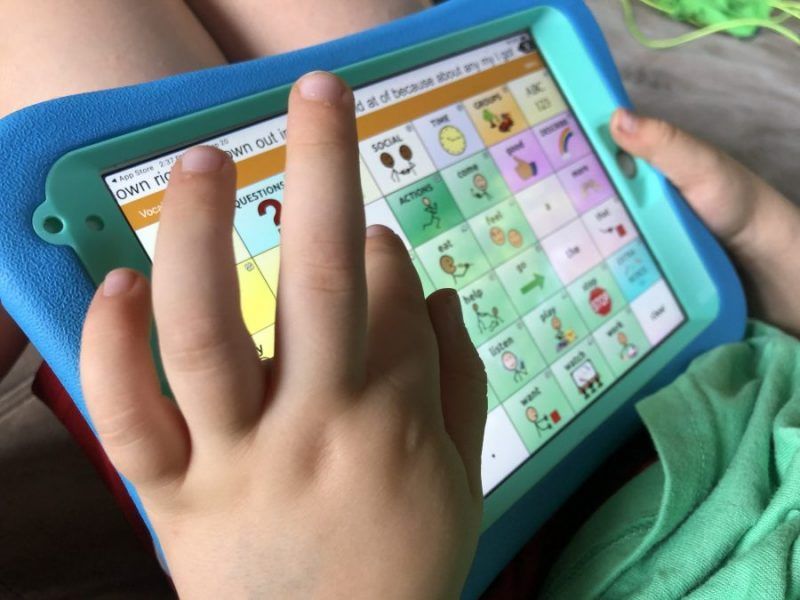
If your child is not yet talking, has limited speech or is hard to understand, your speech pathologist may suggest AAC (Augmentative and Alternative Communication). AAC includes communication apps, dedicated speech generating devices, communication books and other tools that help children express themselves.
Before you buy an AAC device or app, it is usually best to complete an AAC trial. This guide explains what an AAC trial is, what happens during one, how the right system is chosen and what comes next.
What is an AAC trial?
An AAC trial is a period where your child tries out one or more communication systems before you commit to buying one. It gives your child, your family and your speech pathologist a chance to see how a system works in real life, at home, at school and out in the community.
AAC devices and apps can be a significant investment. A trial helps make sure the system you choose actually suits your child.
How do you choose the right AAC device or app for your child?
There is no single "best" AAC app or device. The right system depends on your child. A speech pathologist will consider your child's:
- Communication and language skills
- Motor skills and how they use their hands
- Sensory needs
- Learning style and interests
- Family routines and priorities
- Everyday environments, such as kinder, school and home
Here are some examples of how these factors can guide the choice:
- If your child often drops or throws iPads, a more durable dedicated AAC device may be worth exploring.
- If your child's school already uses Proloquo2Go, using the same app at home can create consistency, so everyone models language the same way.
- If your child is a gestalt language processor who communicates using phrases or scripts from shows and videos, a system such as TouchChat with WordPower may be worth trialling.
- If your child has significant motor planning difficulties (dyspraxia), a system such as LAMP Words for Life may be considered.
These are just examples. AAC selection is highly individual, and a good assessment looks at the whole child.
What happens during an AAC trial?
AAC trials can look different for every family.
Trials in therapy sessions: Your speech pathologist may introduce different systems during regular sessions. They model language on the system and observe how your child responds and engages.
Borrowing a device to take home: For some dedicated communication devices, formal trials can be arranged through suppliers such as Liberator or Tobii Dynavox. Depending on the device and provider, your child may be able to take a loan device home for a period of time. This lets you see how the system works during meals, play, outings and everyday routines.
What does the speech pathologist look for during an AAC trial?
During a trial, your speech pathologist may consider questions such as:
- Is your child interested in exploring the system?
- Are they finding ways to communicate new messages?
- Do they carry the device or go looking for it?
- Do they watch or respond when adults model language on the system?
- Can they use it across different activities and places?
- Does the system seem comfortable and accessible for them?
- Are there any signs they are avoiding or rejecting it?
Your observations matter too. You know your child best. Your speech pathologist may ask you, your child's teachers and other important people how your child is using the system at home, at school and in the community.
What happens after we choose an AAC system?
Once you and your speech pathologist have found a system that seems like a good fit, they can help you with the next steps.
Can the NDIS fund an AAC device?
For children with NDIS funding, an AAC device may be funded as Assistive Technology. Your speech pathologist may need to complete an Assistive Technology application and provide supporting evidence from the trial. Your support coordinator or plan manager can help you understand the funding and purchasing process for your child's plan.
Will my child just start using the device straight away?
Usually not, and that is completely normal. AAC is a language system, and learning a new language takes time. Just as babies hear thousands of spoken words before they start talking, children learning AAC need to see others using their system many times before they use it themselves.
This is why AAC therapy is so important after the device arrives.
What happens in AAC therapy?
Early AAC therapy goals often include:
- Personalising the system so it reflects your child's interests, favourite people, places, activities and the words they need every day.
- Coaching the people around your child, including parents, siblings, educators and other therapists, to model language on the system and communicate with it naturally.
The people around your child play a huge role in making AAC part of everyday communication. AAC therapy is not just about teaching your child which buttons to press. It is about creating an environment where your child has plenty of chances to communicate, and where everyone knows how to support them.
Will AAC stop my child from learning to talk?
This is one of the most common worries parents have, and it is an understandable one. Research shows that AAC does not stop children from developing speech. For many children, AAC can actually support speech and language development.
There is no need to wait for speech to "fail" before exploring AAC. AAC can be introduced alongside developing speech, giving your child a reliable way to communicate while their skills continue to grow.
Your family's voice matters
Starting AAC can feel like a big step, and it is completely understandable to have questions or concerns along the way. A good AAC process should be collaborative.
Your child's preferences, your family's priorities and your knowledge of your child should all be part of the decision. You should feel comfortable asking questions, requesting more information and sharing what you notice throughout the assessment, trial and therapy process. If something does not feel right, or you are unsure about a recommendation, talk to your speech pathologist.
AAC should be a positive way for your child to communicate, participate and connect with the people around them.
Frequently asked questions about AAC trials
How long does an AAC trial take?
It varies. Some trials happen over several therapy sessions, while home loans of dedicated devices often run for a few weeks, depending on the supplier and the device.
Is an iPad app or a dedicated AAC device better?
Neither is better for every child. iPad apps can be more affordable and familiar, while dedicated devices can be more durable and are locked to communication only. A trial helps you work out which suits your child.
What age can a child start using AAC?
There is no minimum age. Toddlers and preschoolers can benefit from AAC, as can school aged children and teenagers.
Do we need an AAC assessment before a trial?
Yes, a speech pathologist will usually assess your child's communication, motor, sensory and learning needs first, so the systems trialled are a good match.
AAC support in Mount Waverley and Melbourne's eastern suburbs
At Approach Speech Pathology in Mount Waverley, we support children from preschool to secondary school with AAC assessments, AAC trials and ongoing AAC therapy.
Wondering if AAC could help your child? [Contact us] to book an appointment or ask a question.